
Your voice is produced by a system, not just your throat. Posture affects singing because it directly influences:
- Breathing efficiency (rib and lung expansion)
- Larynx freedom (less compression or strain)
- Neck and jaw tension
- Vocal endurance (how long you can sing well)
Poor posture doesn’t just limit sound—it often forces singers to compensate with throat tension, which leads to fatigue and inconsistency.
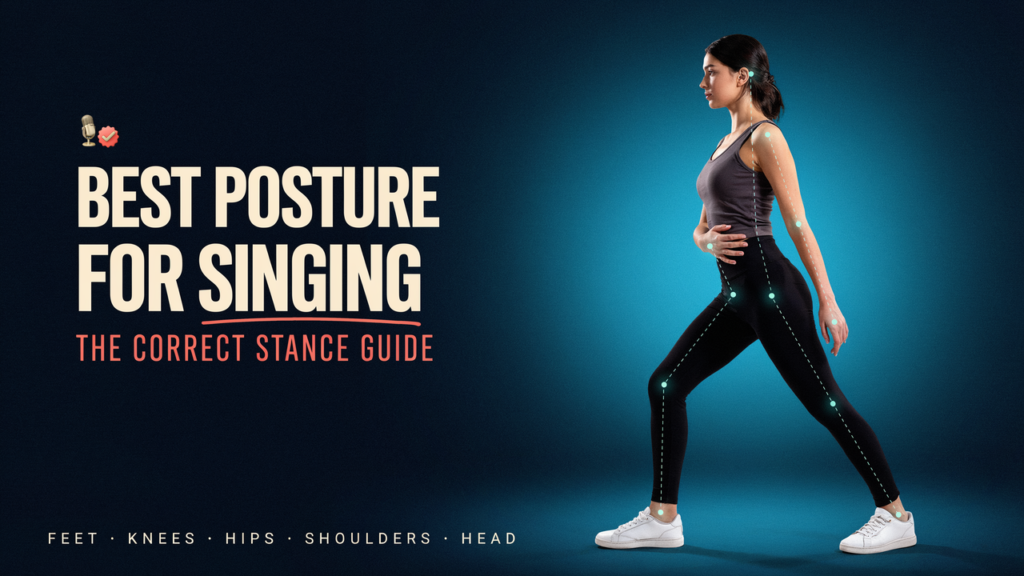
What good singing posture actually looks like
Think of posture as stacking, not holding.
A useful alignment reference:
ears → shoulders → hips → ankles
These points should line up naturally when viewed from the side.
If you feel rigid, you’re overdoing it.
Best standing posture for singing (step by step)
This is the most commonly taught and most versatile position.
1. Feet
- Hip-width apart
- Weight evenly distributed (not leaning back on heels or forward on toes)
- Feel “grounded,” not stiff
2. Knees
- Unlocked
- Locked knees restrict blood flow and breath mobility
3. Pelvis
- Neutral position (not tucked under, not arched)
- Imagine your pelvis as a bowl of water that shouldn’t spill forward or back
4. Spine
- Long and tall, but natural
- Avoid “military posture” (overly straight, chest forced up)
5. Chest and ribs
- Comfortably open
- Ribs should be able to expand sideways and back when you inhale
- Do not lift the chest aggressively
6. Shoulders
- Relaxed and wide
- Let them rest where they naturally fall—no pulling back or down
7. Head and neck
- Head balanced over the spine
- Chin level (not jutting forward or lifted)
- Neck free, as if the head is gently floating upward
If you feel tension in your neck or lower back, reset—you’ve likely overcorrected.
Best sitting posture for singing
Sitting posture matters for:
- Choir rehearsals
- Pianists
- Studio recording
- Long practice sessions
How to sit correctly for singing
- Sit on the front half of the chair
- Feet flat on the floor
- Knees roughly under hips
- Spine tall and flexible
- Avoid leaning against the chair back
Think “standing posture, just seated.”
If you slump, breath support collapses. If you sit rigidly, tension builds.
Common singing posture mistakes (and why they hurt your voice)
1. “Military posture”
- Chest forced up, shoulders pulled back
- Restricts rib movement
- Creates neck and lower-back tension
2. Locked knees
- Reduces stability and breath flow
- Can cause lightheadedness
3. Chin jutting forward
- Compresses the throat
- Common when reaching for high notes
4. Slouching
- Limits lung expansion
- Encourages shallow breathing
5. Over-focusing on posture
- Ironically creates tension
- Posture should feel easy, not monitored every second
Try this free online vocal range testing tool today.
Posture and breathing: how they work together
Posture does not replace breath technique—but it makes proper breathing possible.
Good posture allows:
- Side and back rib expansion
- A responsive diaphragm
- Controlled exhalation while singing
Bad posture forces:
- Shoulder breathing
- Throat tension
- Inconsistent airflow
If breathing feels strained, posture is often part of the problem.
Quick self-checks singers can do anywhere
1. Wall alignment test
- Stand with heels, hips, shoulders, and back of head lightly touching a wall
- Step away while keeping the same alignment
- Notice how little effort is required
2. Gentle sway test
- Rock slightly forward and back
- Settle where balance feels easiest
- That’s your natural center
3. Silent breath test
- Inhale silently
- If shoulders lift or chest locks, reset posture
These checks take under 30 seconds and prevent tension buildup.
Does posture differ by singing style?
The fundamentals stay the same across styles:
- Balanced alignment
- Free neck and jaw
- Responsive breathing
Differences are subtle:
- Pop and musical theatre may use more movement
- Classical singers may appear more still
- Contemporary styles still rely on efficient posture, even if it looks casual
Good posture is adaptable, not rigid.
Final takeaway
The best posture for singing is tall, balanced, and relaxed.
It should feel:
- Stable but flexible
- Upright without stiffness
- Supportive, not controlling
If your posture helps you breathe easily and sing without strain, it’s working—regardless of how “perfect” it looks.
FAQs
What is the best posture for singing?
An upright, balanced posture with relaxed shoulders, unlocked knees, aligned head and spine, and free breathing.
Should I sing standing or sitting?
Standing offers more freedom, but good sitting posture can be just as effective when done correctly.
Is military posture good for singing?
No. Overly rigid posture restricts breath and increases tension.
Should my shoulders be back when singing?
No. Shoulders should be relaxed and natural, not pulled back or down.
Can bad posture damage my voice?
Over time, yes. Poor posture can lead to chronic tension, fatigue, and vocal strain.
How do I fix neck tension while singing?
Check head alignment, release shoulder tension, and avoid lifting the chin on high notes.
- Many singers improve alignment by combining posture work with Alexander method exercises.
- Expanding vocal capability pairs well with how to increase your vocal range.
- Understanding voice mechanics is easier after reading how do the vocal cords work.
- Beginners often see faster results by practicing vocal exercises to increase range.
- Proper tone control can be reinforced with how to do vibrato in singing.
- Comparing voice types helps contextualize posture benefits, such as mezzo-soprano vs contralto.
- Long-term singers often link posture improvements to starting a singing career.

John Mayer is a vocal analysis and music education writer specializing in vocal range testing, voice type analysis, pitch recognition, and singing improvement tools for singers, musicians, performers, and beginners. He creates practical content focused on vocal training, singing techniques, and voice analysis tools to help users better understand and improve their vocal abilities.