
For a long time, I thought vocal warm-ups were optional.
If my voice felt “fine,” I’d jump straight into singing. Some days it worked. Other days, my voice felt stiff, high notes were unreliable, and by the end of practice I felt vocal fatigue that I couldn’t explain.
The pattern only became obvious later:
The days I skipped warm-ups were the days my voice felt unpredictable.
Vocal warm-up exercises prepare your voice by improving breath control, flexibility, and tone. Effective warm-ups include lip trills, humming, vocal sirens, gentle scales, and breath support drills to reduce strain, increase range, and protect vocal health before singing.
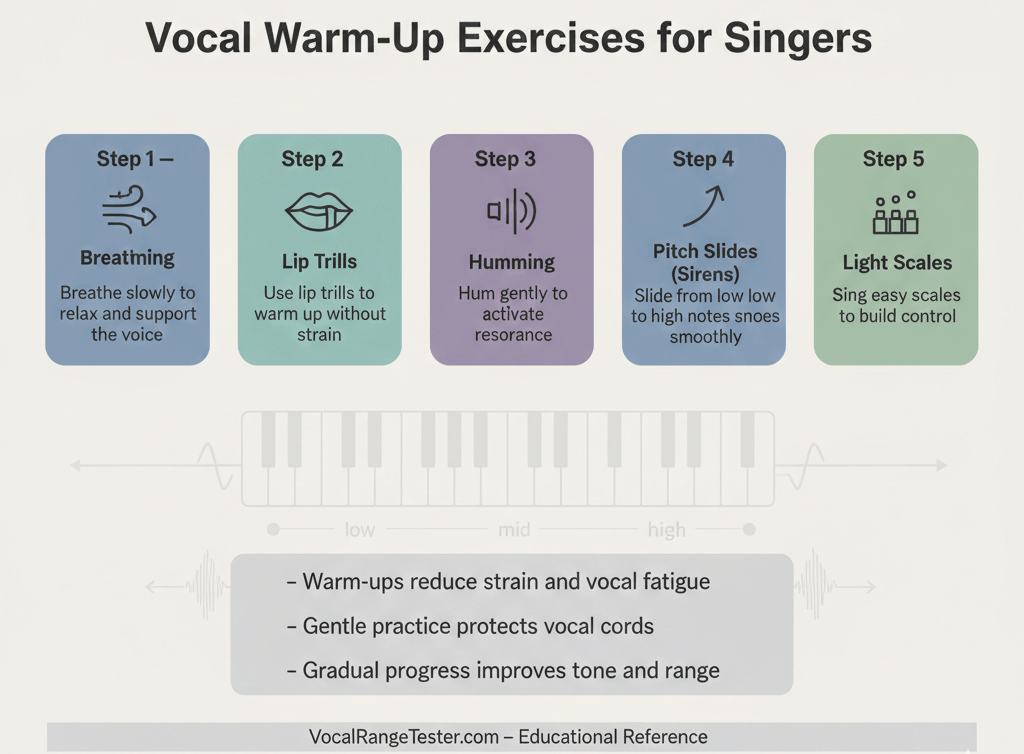
What Are Vocal Warm-Up Exercises?
Vocal warm-up exercises are gentle physical and vocal activities that prepare the voice for singing or speaking by improving coordination, blood flow, and breath-to-sound balance—before demanding vocal use.
A proper warm-up:
- Feels easy, not intense
- Builds gradually
- Leaves the voice more responsive, not tired
If warm-ups feel like hard work, they’re no longer warm-ups.
For the anatomical “why” behind this, see how vocal cords work.
Why Vocal Warm-Ups Matter More Than Most Singers Realize
One mistake I made early on was thinking warm-ups were about “stretching” the voice. They’re not.
Vocal warm-ups primarily:
- Improve neuromuscular coordination
- Reduce unnecessary throat tension
- Help the vocal cords meet cleanly
- Stabilize breath pressure
- Make range and tone more consistent
This is why professional singers warm up even when they don’t feel tight. Warm-ups prevent problems you won’t notice until after singing.
How Long Should Vocal Warm-Ups Take?
Most singers need 5–15 minutes of vocal warm-up exercises.
From experience:
- 5 minutes → light practice, speaking, quick checks
- 10–15 minutes → rehearsals, high notes, performances
Longer warm-ups don’t equal better results. I’ve overdone warm-ups before—and my voice felt fatigued before I even started singing.
The Vocal Warm-Up Exercises That Actually Help (In the Right Order)
1. Physical Release (1–2 Minutes)
I used to skip this step. That was a mistake.
Before singing:
- Gently release shoulders
- Let the jaw hang loosely
- Keep the neck neutral (no aggressive stretching)
Tension anywhere in the body shows up in the voice.
2. Breath Activation (2 Minutes)
This step fixed inconsistent tone for me more than any scale ever did.
- Quiet inhale (no shoulder lift)
- Feel expansion in ribs and abdomen
- Slow exhale on “sss” or “vvv”
This sets stable airflow before sound. Learn more in breathing techniques for vocal range.
3. Lip Trills (The Safest Core Exercise)
Lip trills became my “reset button” when my voice felt unreliable.
- Loose lips
- Gentle glides up and down
- No pushing for range
They balance airflow and vocal cord closure automatically.
4. Gentle Humming (Resonance Without Strain)
- Use “mm” or “ng”
- Stay well within your comfortable range
- Focus on vibration, not loudness
If humming feels tight, stop—your warm-up is already telling you something important.
5. Light Scales (Preparation, Not Performance)
This is where many singers go wrong.
- Use soft vowels (“oo,” “ee”)
- Move gradually
- Stop before effort appears
Warm-ups prepare the voice—they are not the time to test range. If high notes are part of your session, pair this with how to sing high notes without straining.
5-Minute vs 15-Minute Vocal Warm-Up Routines
5-Minute Routine (When Time Is Tight)
- Physical release
- Breath activation
- Lip trills
- Gentle humming
15-Minute Routine (Full Preparation)
- Physical release
- Breath work
- Lip trills
- Humming
- Light scales
- Easy melodic patterns
You can also build a custom sequence using the vocal warm-up generator or The voice range tester provides quick results..
Common Warm-Up Mistakes I Had to learn
| Mistake | What It Caused |
|---|---|
| Singing loudly during warm-ups | Early fatigue |
| Jumping to high notes | Throat tension |
| Treating warm-ups like training | Inconsistent voice |
| Skipping warm-ups when “feeling fine” | Random off days |
| Over-warming | Less endurance |
For long-term protection, review vocal health tips.
Are Vocal Warm-Ups the Same as Vocal Exercises?
No—and confusing these slowed my progress.
- Warm-ups prepare coordination
- Exercises develop skill (range, agility, power)
Warm up first. Then train. If your goal is expansion, follow how to increase vocal range safely.
Effective vocal warm-up exercises include:
- Physical release
- Breath activation
- Lip trills
- Gentle humming
- Light scales
Warm up for 5–15 minutes, stop before fatigue, and never sing through pain.
Frequently Asked Questions
1. Do I really need to warm up every time?
Yes. Even short sessions benefit from warm-ups.
2. What should vocal warm-ups feel like?
Easy, controlled, and lighter—not tiring.
3. Can warm-ups prevent vocal strain?
Yes. They significantly reduce tension and injury risk.
4. Should beginners warm up differently?
Beginners should keep warm-ups shorter and gentler.
5. Can vocal warm-ups increase my range?
They prepare the voice; range increases come from training.
6. Is it bad to sing without warming up?
Occasionally may be fine—but doing it regularly increases risk.
7. Can I warm up silently?
Breathing helps, but gentle sound is essential.