To measure your vocal range, sing from your lowest comfortable note to your highest clear note using a piano or pitch tuner, without strain. Record both notes to calculate your range in octaves and determine your voice type accurately.
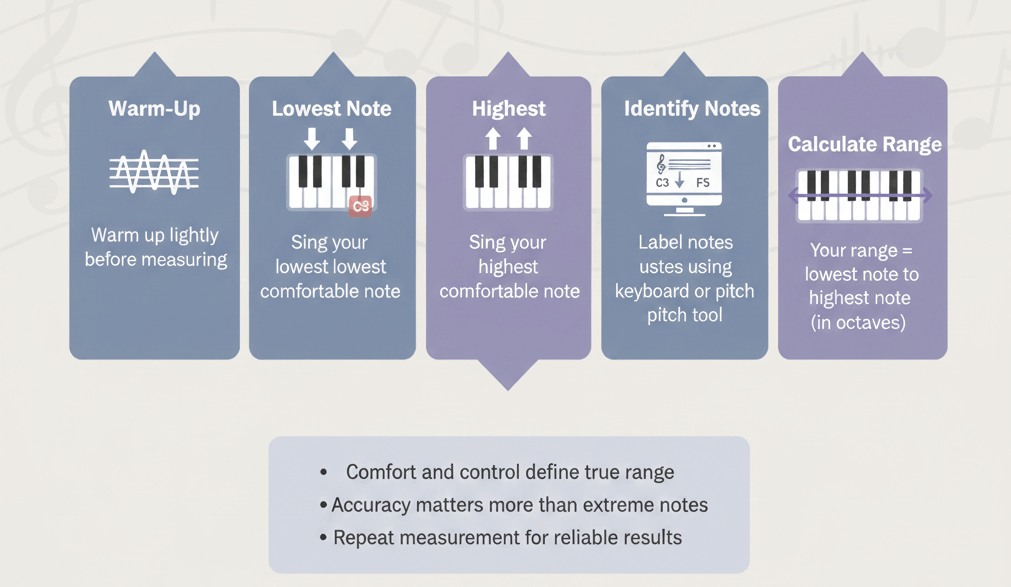
Warm up first, then use a piano or tuner to find the lowest note you can sing comfortably and the highest note you can hit clearly. Count the notes between them to calculate your full range in octaves.
What Measuring Vocal Range Really ?
Your vocal range is the span between the lowest and highest notes you can sing with clear tone, stable pitch, and reasonable control. It is usually written using musical notes, such as A2–D5.
A correct measurement focuses on usable vocal range, not the most extreme sound you can force once. Notes that feel strained, breathy, or unstable should not be counted. This practical approach matches the definition explained in what vocal range is and avoids misleading octave claims.
After measuring, many singers use a vocal range chart to see where their notes fall relative to common singing ranges.
What to Do Before Measuring Your Vocal Range
Warm Up Your Voice
Measuring your vocal range without warming up often leads to inaccurate results and unnecessary strain. Even a short warm-up improves coordination and pitch stability.
Simple humming, lip trills, or guided vocal warm-up exercises are enough to prepare most voices safely.
Measure Under Normal Conditions
Avoid measuring your range:
- Early in the morning
- When sick or hoarse
- After long periods of speaking or singing
Small day-to-day changes are normal and expected.
How to Measure Vocal Range Step by Step
Step 1: Find Your Lowest Comfortable Note
Start from your natural speaking pitch and sing downward slowly, one note at a time. Stop as soon as the tone becomes breathy, unclear, or unstable.
The last note you can sing clearly is your lowest usable note.
Step 2: Find Your Highest Comfortable Note
Begin in the middle of your range and sing upward gradually. Stop when the sound feels strained, thin, or forced.
The last note you can sing with control is your highest usable note.
Step 3: Write Down Your Vocal Range
Write your range like this:
Lowest note – Highest note
Example: A2–D5
If you are unsure how note names work, this guide to vocal range notes can help you label them correctly.
Methods to Measure Vocal Range
Measuring Vocal Range With a Piano or Keyboard
Using a piano or keyboard is one of the most reliable at-home methods. Play one note at a time and match it comfortably with your voice, recording only stable notes.
This approach is commonly used in vocal training because it provides a clear pitch reference.
Measuring Vocal Range With an App or Tool
Pitch-detection tools offer quick estimates and are especially helpful for beginners. A vocal range calculator can automatically detect your lowest and highest sung notes.
These tools are useful for orientation, but they cannot assess tone quality or vocal tension.
Measuring Vocal Range Online
Some singers prefer browser-based tools to find their vocal range online before refining their results with a keyboard or chart.
Common Reasons Vocal Range Measurements Are Inaccurate
Many singers get misleading results because they:
- Measure without warming up
- Force high or low notes
- Count strained or unstable sounds
- Measure while vocally tired
These issues often inflate range numbers and create unrealistic expectations.
What to Do After Measuring Your Vocal Range
Once you know your range, compare it with common voice types to understand where your voice may sit naturally. Remember that range alone does not determine voice type or singing ability.
If your goal is improvement, focus on coordination and technique rather than chasing extremes. Learning how to increase vocal range safely over time is far more effective than repeatedly retesting your limits.
Frequently Asked Questions
1. What is the most accurate way to measure vocal range?
Using a piano or keyboard after a proper vocal warm-up provides the most reliable results.
2. Can I measure my vocal range at home?
Yes. Many singers accurately measure their range at home using keyboards, apps, or online tools.
3. Should strained notes be included in vocal range?
No. Only notes you can sing clearly and comfortably should be counted.
4. How accurate are vocal range calculators?
They provide helpful estimates but cannot evaluate tone quality or vocal health.
5. Does vocal range change over time?
Yes. Training, age, technique, and vocal health all influence vocal range.
6. How often should vocal range be measured?
Every few months is sufficient unless you are actively training or rehabilitating your voice.
7. Is vocal range the same as voice type?
No. Voice type depends on tessitura, tone, and comfort — not range alone.
Related Articles:
- A reliable starting point is following a step-by-step vocal range test designed to reduce guessing.
- Accuracy improves when you understand note placement, which is why this vocal note guide is useful during measurement.
- To avoid confusing extremes with usable notes, checking the average vocal range provides a realistic benchmark.
- Warm muscles produce cleaner results, making a guided warm-up generator a smart first step.
- Measuring range without tracking accuracy can mislead, which is why a pitch accuracy analyzer complements testing well.
- For confirmation beyond manual testing, many singers validate results using AI voice analysis.