
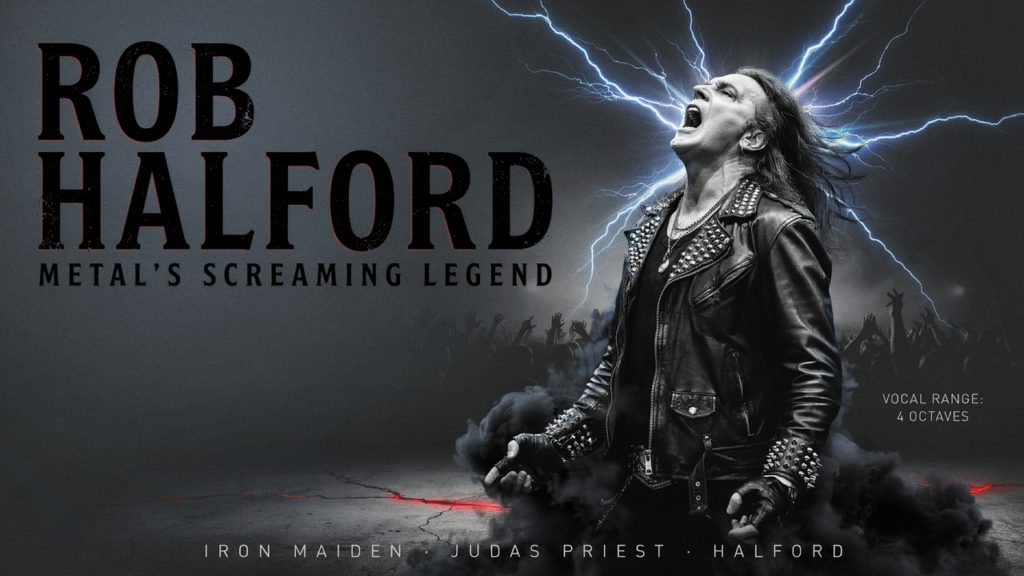
Rob Halford’s vocal range refers to the span between the lowest and highest pitches he has sung in recorded performances, including both clean notes and high-pitched screams. His range is often described as spanning multiple octaves, with a powerful tenor core and an extended upper register that defines classic heavy metal vocals.
Rob Halford isn’t just “high.” He’s controlled, strategic, and stylistically sharp. If you want to understand his range, you have to separate myth from measurable technique.
How Wide Is Rob Halford’s Vocal Range?
Different sources list different numbers, but most agree that his voice spans roughly four octaves when counting clean notes and extreme extensions.
Here’s the important distinction:
A distorted scream at a very high pitch is not the same thing as a clean, sustained sung note.
When analyzing his range, you need to divide it into registers. If you’re unsure how note names work, review note names in singing so you can understand pitch references clearly.
Use the decibel checker to compare speaking vs singing volume.
Clean Notes vs Screamed Notes (This Is Critical)
Many debates around Rob Halford’s range come from confusion about distortion.
Distortion adds texture. It does not automatically mean the pitch is higher.
Think of it like a guitar with overdrive. The tone changes, but the note itself doesn’t move up the fretboard.
Clean singing
This includes chest voice, mix, and falsetto. These are pitched tones that can be sustained clearly.
Distorted scream
This often layers fry or compression on top of pitch. The sound feels explosive, but the underlying pitch still follows vocal mechanics.
If you want context for where his voice sits compared to other male voices, reviewing a tenor vocal range will give you perspective.
What Voice Type Is Rob Halford?
Rob Halford is generally classified as a high tenor with extreme upper extension.
His core strength lives in the upper midrange, where his voice cuts through guitars without sounding buried.
Tessitura matters more than extremes
A singer might hit a very high note once, but that doesn’t define their voice type.
Tessitura is the range you can sing repeatedly without fatigue. If you need clarity on this concept, revisit what tessitura means because it explains why “highest note” isn’t the full story.
Halford’s tessitura during his prime years sat comfortably high for a male singer, especially in heavy metal repertoire.
Register Breakdown: Where His Power Comes From
To understand Halford’s range, it helps to see it in functional zones.
| Register | What It Sounds Like | How It Functions |
|---|---|---|
| Chest voice | Strong, metallic, aggressive | Speech-based power |
| Mix | Focused, cutting, bright | Balanced closure + resonance |
| Falsetto | Lighter but piercing | Thinner vocal fold contact |
| Extreme extension | Screamed or compressed highs | Added distortion over pitch |
This structure explains why he can sound massive without always “yelling.”
If you want to compare this with general expectations for male singers, check the context of human vocal range so you understand what’s typical versus exceptional.
Step-by-Step: Training Upper Range Without Destroying Your Voice
Rob Halford’s sound inspires a lot of singers to push too hard too soon. That’s the fastest way to lose range.
Here’s the safer path.
1. Build clean midrange first
If your midrange isn’t stable, your high notes won’t be either.
Sing 5-note scales on “mum” at moderate volume. Keep the sound focused, not wide.
2. Strengthen head voice before screaming
Many metal singers skip this step.
Practice sliding gently into head voice on “ng” (like the end of “sing”). If it cracks, you’re forcing.
3. Blend mix gradually
Mix voice feels like speech with lift, not like shouting.
If you want structure here, study how to sing high notes safely and focus on coordination rather than force.
4. Add controlled compression later
Distortion should be added after pitch is stable.
If your pitch wobbles when adding grit, remove the grit. The pitch comes first.
5. Stop at the first sign of pain
Tightness, scratchiness, or a burning feeling means you’re overdoing it.
There’s no badge of honor in vocal strain.
If your goal is long-term range growth, follow a structured approach like increase vocal range instead of chasing extreme notes.
The 5 Technical Realities Behind His High Notes
Rob Halford’s extreme highs are impressive, but they’re not magic.
- Strong breath control
- Efficient vocal fold closure
- Controlled compression
- Strategic vowel narrowing
- Years of adaptation
Think of it like weightlifting. You don’t start with 300 pounds. You progressively overload.
Quick Self-Check: Are You Training or Just Forcing?
Before you attempt metal-style high notes, run through this checklist:
- Your throat feels relaxed before you begin
- You can sing the note softly first
- Your neck muscles stay loose
- You can repeat the note three times
- Your speaking voice feels normal afterward
If two or more fail, stop. Reset. Rest.
High notes should feel lighter as they improve, not heavier.
If you want a tool-based check, run your scale through a pitch accuracy test to confirm your upper notes aren’t drifting sharp or flat under pressure.
Common Mistakes When Trying to Sing Like Rob Halford
Pushing chest voice too high
This creates tension fast.
Instead of lifting the pitch with force, allow the sound to thin slightly as you ascend.
Confusing loud with high
Volume and pitch are separate controls.
You can sing high softly. If you can’t, you’re not balanced yet.
Skipping head voice development
Many singers think head voice is “weak.” It’s actually a training ground for safe extension.
Ignoring it is like skipping leg day in the gym.
Overusing distortion
Distortion hides flaws temporarily but magnifies fatigue.
Add it only when clean pitch is stable.
Comparing your range to someone else’s anatomy
Rob Halford’s vocal fold thickness and resonance shape are unique.
Your goal isn’t to copy his range exactly. It’s to build yours intelligently.
For perspective, look at a vocal range chart so you see where your voice sits naturally.
What Aging Teaches About Range
One overlooked part of Rob Halford’s career is longevity.
Extreme upper notes often soften with age. That’s normal.
The real measure of skill is not how high you can sing at 25. It’s how consistently you can sing at 55.
Protecting your voice now keeps options open later.
Can You Sing Like Rob Halford?
Yes, you can develop aspects of his technique.
No, you cannot duplicate his anatomy.
Focus on:
- Building a strong tenor core
- Developing a reliable mix
- Training head voice flexibility
- Adding distortion carefully
If you’re unsure where your current limits are, use a vocal range calculator to track progress over time.
What Makes His Range Special (Beyond Numbers)
Rob Halford’s impact isn’t just about high notes.
It’s about contrast.
He moves from controlled midrange to explosive highs in seconds. That dynamic range—emotionally and technically—is what defines his sound.
High notes without control are noise.
High notes with intention are music.
FAQs
1) What is Rob Halford’s vocal range?
Rob Halford is often credited with a range spanning around four octaves when counting clean notes and extreme upper extensions. His core voice sits in a high tenor range. The extreme highs include falsetto and distorted extensions.
2) What is Rob Halford’s highest note?
His highest notes are often delivered with distortion, especially in classic heavy metal recordings. Clean sung notes and screamed notes should be considered separately. Exact pitch claims vary depending on performance.
3) Is Rob Halford a tenor?
Yes, he is widely considered a high tenor. His tessitura sits comfortably higher than most male singers, especially during his prime years. His upper mix is a defining feature.
4) Does Rob Halford use whistle register?
Most evidence suggests his extreme highs are distorted falsetto or compressed upper extension rather than true whistle register. Distortion can make notes sound higher than they are. Clear whistle production is rare in male metal singers.
5) How can I train high notes like Rob Halford safely?
Build clean head voice and mix first. Add controlled compression only after pitch stability is consistent. Stop immediately if you feel pain or persistent throat tightness.
6) Was his range bigger in the 1980s?
Like many singers, his highest extremes were more frequent earlier in his career. Aging naturally affects flexibility and stamina. Longevity matters more than peak extremes.
7) Why do people argue about his range online?
Because distortion blurs pitch perception and different sources count different types of notes. Some count only clean sustained notes, others include brief screams. Clear definitions solve most of the debate.

John Mayer is a vocal analysis and music education writer specializing in vocal range testing, voice type analysis, pitch recognition, and singing improvement tools for singers, musicians, performers, and beginners. He creates practical content focused on vocal training, singing techniques, and voice analysis tools to help users better understand and improve their vocal abilities.