
Johnny Cash is famous for his deep, steady, unmistakable voice. But “deep” doesn’t automatically mean “huge range.” If you’re a singer trying to understand his voice—or wondering if you can sing his songs—you need clarity on range, tessitura, and tone.
Let’s break it down like a coach would.
Quick Definition
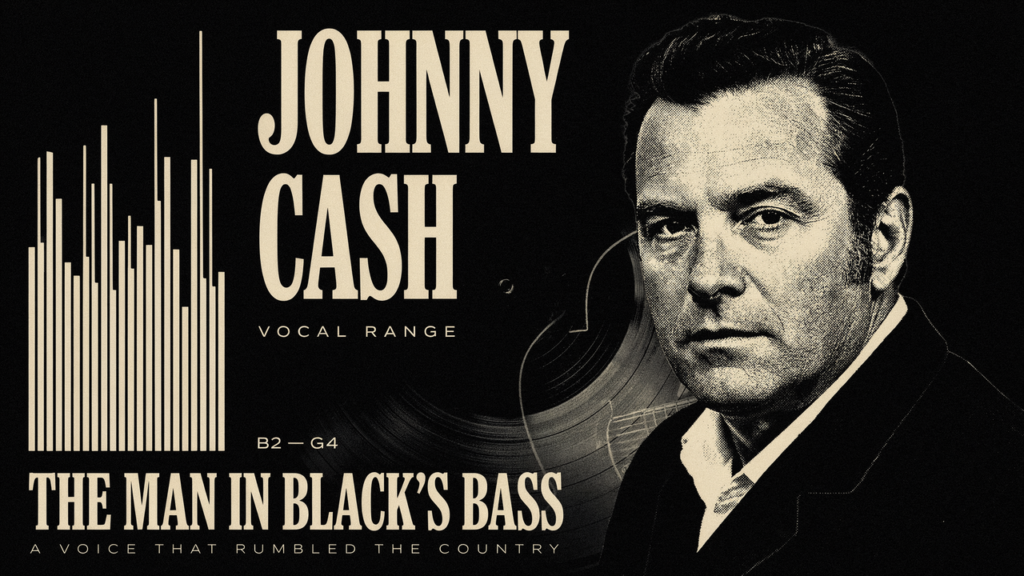
Johnny Cash’s vocal range refers to the lowest and highest notes he sang in recordings and live performances. While exact notes vary depending on the source and era, his most consistent singing sits in a low male tessitura typical of a bass-baritone, supported by strong chest resonance and a naturally dark vocal tone.
The sound level meter helps you monitor loudness during vocal practice.
Range vs. Depth: The Most Common Confusion
Many people assume Johnny Cash must have had an extremely low bass range because his voice sounded so deep.
That’s not how it works.
Pitch (how low a note actually is) and timbre (how dark or deep it sounds) are different. A voice can sound cavernous without reaching extreme classical bass notes.
If you’re unsure how vocal range is measured, review what vocal range actually means before comparing yourself to him.
Was Johnny Cash a Bass or a Baritone?
This is the question most singers ask.
Johnny Cash is commonly classified as a bass-baritone. That means:
- Lower and darker than most baritones
- Not necessarily a true operatic bass
- Strongest in the low to mid range
If you want context, compare typical classifications using the bass vocal range guide and the baritone range explained.
The key takeaway: Cash’s power came from where he was comfortable—not from extreme notes.
Tessitura: Where Johnny Cash Lived Vocally
Tessitura is the range where most of a singer’s melodies sit.
Cash’s tessitura stayed low and steady. He rarely chased high notes. Instead, he delivered:
- grounded phrases
- speech-like tone
- consistent chest resonance
Think of his voice like a diesel engine. It doesn’t rev high, but it runs steady and powerful.
If you want to see how your own range compares, use the vocal range chart as a reference.
Why Johnny Cash Sounded So Deep
His depth came from a combination of factors:
- Thick chest resonance
- Relaxed, low speech posture
- Minimal vocal “lift” into brighter head tones
- Strong consonants
- Limited use of falsetto
He didn’t try to lighten or brighten the voice much. That consistency created authority and gravity.
Some singers try to imitate that by pushing their larynx down. Don’t. That creates tension and long-term strain.
Depth should feel natural, not forced.
How to Sing Johnny Cash Songs Safely
Most singers don’t strain singing Cash because of high notes. They strain because they try to make their voice artificially darker.
Step 1: Speak the lyric naturally
Cash’s singing is close to speech. Say the line like a calm storyteller.
If it sounds exaggerated or theatrical, you’re already off track.
Step 2: Keep the tone clear, not swallowed
A common mistake is “covering” the sound too much to make it darker.
Instead:
- Keep vowels clean
- Maintain forward resonance
- Avoid depressing the larynx
Dark tone comes from natural resonance, not pushing downward.
Step 3: Support low notes gently
Low notes need steady airflow, not heavy pressure.
If you push air downward to “force depth,” the pitch will wobble or flatten.
A useful comparison: low notes are like balancing a heavy book on your hand. Too much force and it falls. Too little support and it drops.
A Simple Practice Plan (Numbered)
Use this short routine before singing a Johnny Cash song:
- Gentle humming in your lower mid-range for 2 minutes.
- Descending 5-note scales on “mum” without pushing volume.
- Speak one verse rhythmically before singing it.
- Sing the verse at 70% volume, keeping tone natural.
- Record and listen for tension or artificial darkness.
If you want to confirm your true usable low notes first, measure them with the vocal range calculator.
One Table That Helps You Diagnose Low-Note Issues
| What you feel | What it means | What to adjust |
|---|---|---|
| Throat tightens | Forcing larynx down | Relax jaw, keep posture neutral |
| Tone sounds muffled | Over-darkening vowels | Brighten slightly, clear consonants |
| Pitch drops flat | Too much air pressure | Use steadier, lighter airflow |
| Voice feels tired | Pushing chest weight | Reduce volume and intensity |
| Sound lacks depth | Not enough resonance | Think “speaking firmly,” not “singing big” |
Self-Check: Are You Singing Low Notes Correctly?
After practicing a Johnny Cash chorus, ask yourself:
- Does my speaking voice feel normal afterward?
- Can I repeat the song without fatigue?
- Are my low notes stable and in tune?
- Am I darkening the sound naturally instead of forcing it?
- Does my jaw feel relaxed?
If two or more answers are “no,” adjust before repeating.
If you struggle to keep pitch steady in the low range, work on improving pitch control before increasing intensity.
Common Mistakes When Singing Johnny Cash
Mistake 1: Forcing an artificially low larynx
Some singers try to “drop” their voice physically. This causes tension.
Fix: Keep posture neutral and let depth come from relaxed resonance.
Mistake 2: Over-darkening vowels
Swallowing vowels makes tone dull and pitch unstable.
Fix: Keep vowels clear and natural, even in low phrases.
Mistake 3: Ignoring breath control
Low notes collapse when airflow isn’t steady.
Fix: Think “steady exhale,” not “heavy push.”
Mistake 4: Assuming low range equals easy singing
Low voices still require control and support.
Fix: Warm up properly before singing lower repertoire.
Mistake 5: Comparing timbre instead of pitch
Your voice may not sound as dark, even if you hit the same notes.
Fix: Focus on pitch accuracy and comfort, not tone imitation.
Aging and Johnny Cash’s Voice
Johnny Cash’s voice changed over time.
As singers age:
- Upper range may reduce
- Timbre often deepens
- Flexibility can decrease
If you’re curious how range evolves, review how vocal range changes with age.
Cash’s later recordings leaned even more into his natural low tessitura. That was a smart artistic choice.
Can You Sing Johnny Cash If You’re Not a Bass?
Yes—if you adjust the key.
The smartest move is to measure your own usable span using how to find your vocal range and then transpose accordingly.
Lowering or raising a song by 1–3 semitones often makes a dramatic difference in comfort.
You don’t need a naturally cavernous voice. You need stability and storytelling.
Realistic Expectations
Johnny Cash’s range was not massive. It was focused.
What made him iconic:
- Consistency
- Emotional delivery
- Stable low tessitura
- Clear phrasing
If you can sing his songs comfortably without fatigue, you’re doing it right—even if your voice doesn’t sound identical.
Vocal training should feel challenging but never painful. If you feel burning, persistent hoarseness, or tightness, stop and rest.
Final Coaching Perspective
Johnny Cash proves something important: you don’t need extreme high notes to have a powerful voice.
His strength was knowing where his voice worked best—and staying there.
If you do the same, your singing will sound stronger immediately.
FAQs
1) What was Johnny Cash’s vocal range?
Exact notes vary by source, but his consistent singing sat in a low male tessitura typical of a bass-baritone. His strength was stability in the lower register rather than extreme high notes. Range matters less than comfort and control.
2) Was Johnny Cash a true bass?
He is often described as a bass-baritone rather than a classical bass. His tone was very dark, but that doesn’t automatically mean operatic bass classification. Most of his songs sit in a comfortable low-mid range.
3) How many octaves could Johnny Cash sing?
His octave span was moderate, not unusually wide. He focused on practical usable notes rather than vocal extremes. Artistic consistency mattered more than maximum reach.
4) Why did Johnny Cash’s voice sound so deep?
His depth came from strong chest resonance, relaxed speech-like delivery, and naturally dark timbre. Production style and phrasing also contributed. It wasn’t about forcing extremely low notes.
5) Did Johnny Cash lose range as he aged?
Like many singers, his upper range reduced slightly over time. However, his lower resonance and tone deepened, which suited his later material well. Aging voices can remain powerful with smart repertoire choices.
6) Can a baritone sing Johnny Cash songs?
Absolutely. Many baritones and even some tenors can sing his songs comfortably with small key adjustments. Focus on tone and storytelling rather than copying his exact depth.
7) How can I strengthen my low notes safely?
Work on steady airflow, relaxed posture, and clean vowel shapes. Avoid forcing the larynx downward. Practice short, controlled low-note exercises and stop if you feel strain or hoarseness.

John Mayer is a vocal analysis and music education writer specializing in vocal range testing, voice type analysis, pitch recognition, and singing improvement tools for singers, musicians, performers, and beginners. He creates practical content focused on vocal training, singing techniques, and voice analysis tools to help users better understand and improve their vocal abilities.