
Serj Tankian’s vocal range spans roughly three octaves in recorded material, extending from a low baritone foundation into high tenor territory, with additional extreme notes achieved through distortion and stylistic techniques. He is most commonly classified as a baritone with strong upper extension rather than a natural tenor.
That definition gives you the overview. Now let’s break it down like a vocal coach would — clearly, technically, and realistically.
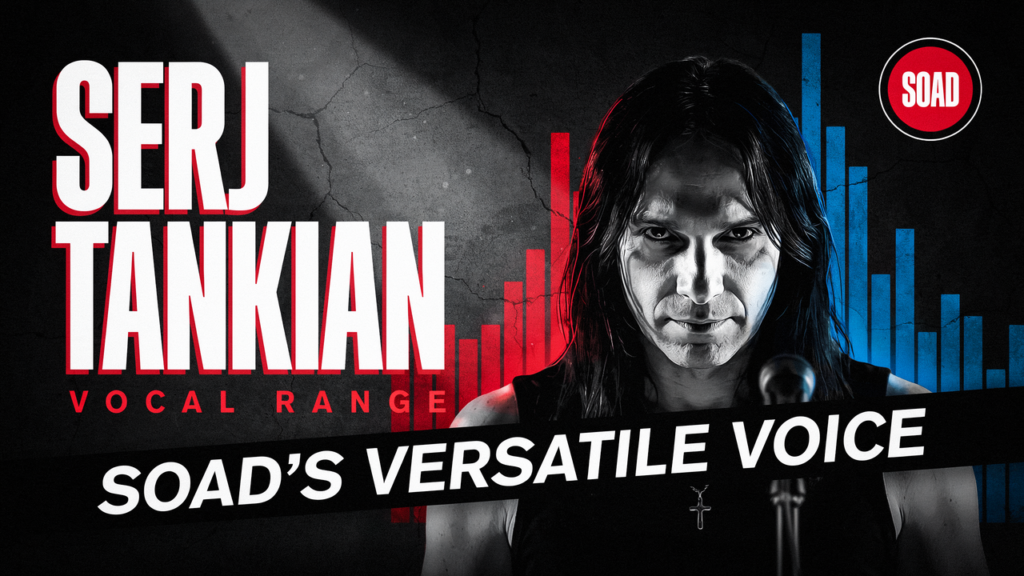
What Is Serj Tankian’s Vocal Range?
Vocal range measures the lowest and highest usable notes a singer can produce with control. In rock and metal, that definition can get confusing because distortion and screams sometimes mask the true pitch.
Serj Tankian demonstrates:
- A grounded lower register consistent with baritone placement
- A flexible midrange capable of strong projection
- High notes achieved through mix, head voice, and distortion
If you’re unfamiliar with how range is measured, it helps to understand what vocal range means before analyzing extreme rock vocals.
His total span is impressive. But what makes it unique is versatility — not just the number of notes.
Is Serj Tankian a Baritone or a Tenor?
This question comes up often.
He is most accurately described as a baritone with extended upper range.
Why Baritone?
His speaking voice sits lower and fuller than a typical tenor. His comfortable midrange aligns more closely with baritone tessitura.
If you compare his lower register to the typical baritone vocal range, the alignment becomes clear.
Why the Confusion?
Because he can sing high.
But high notes alone do not determine voice type. Tessitura — where the voice feels most natural — matters more.
If your mic suddenly stops working, the mic check tool helps you troubleshoot quickly.
Register Breakdown
Chest Voice
His chest register is strong, grounded, and resonant. It has weight without being overly dark.
This is the foundation of his tone.
Mixed Voice
In the upper midrange, he shifts into mix rather than dragging chest voice upward. This prevents constant strain and allows flexibility.
Head Voice and Falsetto
Clean high notes are often produced in lighter coordination. Some upper notes are reinforced through distortion, which changes the sound but does not necessarily increase pitch range.
If you’re unsure where your own registers shift, a vocal range chart can help visualize transitions.
Clean Notes vs Distorted Notes
One of the biggest misunderstandings in rock singing is assuming distortion equals range.
Distortion is a texture layered on top of pitch. It doesn’t magically raise your vocal ceiling.
Here’s a simplified comparison:
| Element | Clean Singing | Distorted Singing |
|---|---|---|
| Pitch Production | Clear vocal fold vibration | Same pitch with added grit |
| Airflow | Balanced | Often increased |
| Strain Risk | Moderate if supported | Higher if forced |
Serj’s high distorted notes still rely on proper pitch coordination underneath the grit.
If you want to measure your own usable range accurately, use a structured tool like the vocal range calculator without distortion.
How His Range Compares to the Average Male Singer
Most untrained male singers have around two octaves of comfortable range.
Serj Tankian’s full span — including clean and stylistic extensions — exceeds that average.
However, his comfortable tessitura remains in baritone territory.
For context, compare with the benchmarks in average male vocal range.
Range size alone doesn’t create power. Control and stamina matter more.
Step-by-Step: Safely Exploring Rock High Notes
Never jump straight into distortion.
Build coordination first.
- Warm up with light lip trills in midrange.
- Glide upward gently on an “oo” vowel.
- Allow the tone to thin naturally instead of pushing chest voice.
- Practice clean high notes before adding grit.
- Introduce light rasp only after the pitch feels stable.
Think of distortion like hot sauce. You add it after the meal is cooked — not before.
If you struggle to stay on pitch while exploring upper notes, improving control with a pitch accuracy test will help more than yelling louder.
Common Mistakes Rock Singers Make
- Forcing chest voice too high
- Using volume instead of coordination
- Confusing distortion with support
- Skipping warm-ups
- Ignoring recovery time
High rock notes should feel focused, not squeezed. If your neck veins are popping, you’re compensating.
If you’re unsure whether your natural voice sits lower or higher, comparing yourself through a tenor vs baritone comparison can clarify expectations.
Self-Check: Is Your Voice Similar?
Ask yourself:
- Does your speaking voice sit comfortably low?
- Are your strongest notes in the midrange?
- Do high notes feel easier when sung lighter?
- Can you sing cleanly before adding distortion?
If most answers are yes, you may share a baritone foundation with upper extension.
If your comfortable range sits higher overall, reviewing the typical tenor vocal range might feel more accurate.
Realistic Expectations for Range Development
Serj Tankian’s range developed over years of performance and stylistic experimentation.
You cannot safely add a full octave in a few weeks.
Healthy range development typically progresses in small increments — sometimes only a few semitones at a time.
If you’re working on upper extension, structured practice like how to sing high notes prevents strain patterns from forming.
Pain is a stop sign. Mild fatigue is common. Sharp discomfort is not.
The Bigger Lesson
Serj Tankian’s vocal identity isn’t built on pure range.
It’s built on versatility.
He moves between clean tone, theatrical phrasing, and distortion without losing pitch center.
The real takeaway for singers:
Master clean technique first.
Add style second.
Range without control is unstable.
Control with moderate range is powerful.
Treat your voice like a precision instrument, not a volume contest.
FAQs
1. How many octaves can Serj Tankian sing?
His total span reaches roughly three octaves when including stylistic extensions. His comfortable tessitura sits in baritone territory.
2. Is Serj Tankian a tenor?
He is most accurately classified as a baritone with strong upper extension, not a natural tenor.
3. Does distortion increase vocal range?
No. Distortion changes tone quality, not pitch range. The underlying note must already be accessible.
4. What is his highest note?
His highest clean notes extend into upper tenor territory, with additional extreme sounds achieved through stylistic techniques.
5. Is his range considered wide for rock?
Yes, especially considering his versatility between low grounded notes and high dramatic passages.
6. Can beginners sing like Serj Tankian?
Not immediately. Developing safe upper extension and controlled distortion takes time and proper coordination.
7. How can I safely train rock high notes?
Build clean high notes first, keep airflow steady, avoid pushing chest voice, and add distortion only after pitch feels stable and tension-free.

John Mayer is a vocal analysis and music education writer specializing in vocal range testing, voice type analysis, pitch recognition, and singing improvement tools for singers, musicians, performers, and beginners. He creates practical content focused on vocal training, singing techniques, and voice analysis tools to help users better understand and improve their vocal abilities.