
Alto vocal range refers to the lowest female singing voice type, known for its rich, warm, and deep tone.
Typical Alto Range:
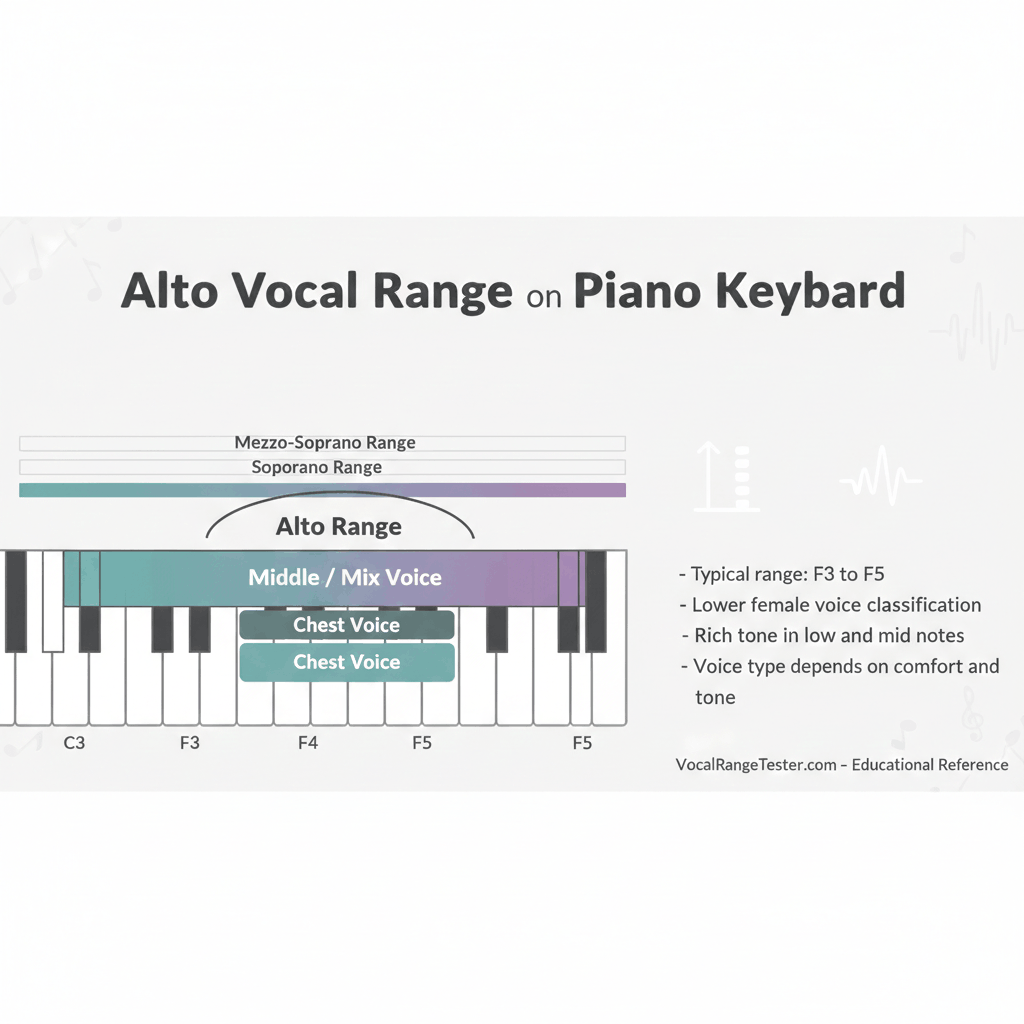
F3 to F5 (sometimes E3 to G5)
Altos sing lower than sopranos and usually perform harmony or lower melody lines in choirs and music. Famous altos include Adele and Annie Lennox.
What Is an Alto Vocal Range?
The alto vocal range is the lowest female voice type, typically spanning F3 to F5, with a rich, warm, and deep tone. It sits below mezzo-soprano and soprano and is common in choir harmony and lower female melodies.
In contemporary vocal pedagogy, an alto refers to a lower female voice whose most comfortable singing area sits lower than a mezzo-soprano’s. While absolute limits vary, the commonly accepted alto range is: F3 to F5
Try this free online vocal range testing tool today.
Alto Vocal Range Notes and Tessitura (What Singers Actually Use)
Many charts list extreme notes, but professional classification focuses on tessitura—the range you can sing most of the time.
Typical alto traits:
- Strong lower-middle register
- Fuller tone below middle C
- Comfortable sustained singing in the midrange
- Upper notes possible, but not effortless
A visual comparison of alto placement among other voices is shown in the vocal range chart.
Alto vs Mezzo-Soprano: Why So Many Singers Are Misclassified
The alto–mezzo overlap is the most common source of confusion in female voice typing.
Key differences:
- Altos feel grounded lower and tire quickly in high tessitura
- Mezzos usually access upper-middle notes more easily
- Both may share similar top notes
Choir placement often labels singers as altos simply because they can sing lower harmony, not because they are true altos. A focused breakdown is available in alto vs mezzo-soprano explained.
Alto vs Contralto: Important but Often Misunderstood
Although used interchangeably in casual contexts, alto and contralto are not the same.
- Alto = general lower female voice (common)
- Contralto = specific classical voice type (rare)
True contraltos have an even lower tessitura, darker timbre, and different repertoire expectations. For clarity, see alto vs contralto comparison.
Why Tessitura Matters More Than Range Extremes
Many singers misclassify themselves by focusing on:
- One-time high notes
- Forced low notes
- Range tests without context
Professional voice identification emphasizes where you can sing:
- Repeatedly
- With consistent tone
- Without strain
If pitch becomes unstable outside your comfort zone, improving coordination is more valuable than changing voice type. This is addressed in how to improve pitch accuracy for singers.
How to Tell If You’re Truly an Alto
A reliable approach includes:
- Gentle warm-up
- Singing through scales without pushing
- Noting where the voice feels strongest
- Identifying where fatigue begins
Objective tools reduce bias. The voice type classifier tool helps singers evaluate range and comfort without relying on assumptions.
Can Altos Sing High Notes?
Yes—but with realistic expectations.
Altos can sing high notes, especially with training, but:
- Sustained high tessitura is tiring
- Forcing soprano repertoire increases strain
- Voice health declines when singers ignore natural limits
Range development should always prioritize longevity. A safe approach is outlined in how to increase vocal range responsibly.
Common Myths About Alto Voices
- Altos cannot sing high notes
- Altos are rare
- Alto means “failed soprano”
- Range alone defines voice type
Alto is a valid, powerful, and musically essential voice type, not a limitation.
Frequently Asked Questions (FAQ)
1. What is the alto vocal range?
Most altos sing comfortably between F3 and F5, depending on the individual.
2. Is alto the lowest female voice?
Yes, alto is the lowest standard female voice type.
3. Is alto the same as contralto?
No. Contralto is rarer and more specific.
4. How do I know if I’m an alto or mezzo?
Tessitura and comfort matter more than highest notes.
5. Are alto voices uncommon?
No. True contraltos are rare; altos are not.
6. Can altos sing soprano songs?
Some notes may be possible, but sustained soprano tessitura is usually uncomfortable.
7. Does training change your voice type?
Training improves control, not basic anatomy.
8. Are altos only female?
In classical classification, yes, though similar ranges exist in male voices.
9. Why are many singers misclassified as altos?
Choir roles and limited testing cause confusion.
10. How can I test my vocal range accurately?
Use structured testing with pitch-based tools instead of guessing.
Related Articles:
- Many singers misclassify themselves, which is why understanding overall voice types is essential before settling on alto.
- Tessitura matters more than extremes, and this vocal range notes guide helps identify where your voice is most comfortable.
- If you’re unsure about your classification, using an online range finder can provide an objective starting point.
- Comparing alto placement against others is easier with this average range reference for context.
- Before drawing conclusions, it’s smart to prepare properly with these vocal warm-up tips to avoid false limits.
- For a more data-driven result, this voice type classifier can help confirm whether alto truly fits.