
The baritone vocal range is the most common male singing voice type, positioned between tenor and bass. It is often misunderstood as a “low” voice, when in reality, baritone is best described as a middle male voice with strength in the lower-middle register rather than extreme highs or lows.
A baritone vocal range is a male voice type between tenor and bass, typically spanning A2 to A4. It has a warm, rich, and powerful tone, making it ideal for expressive melodies, strong harmonies, and dramatic vocal roles.
What Is the Baritone Vocal Range?
A baritone vocal range is a male voice type between tenor and bass, typically spanning A2 to A4. It features a warm, rich, and powerful tone, offering strong low notes, balanced mids, and versatile expression across classical, pop, and contemporary music.
In vocal pedagogy, a baritone is defined as a male voice whose most comfortable singing range sits between tenor and bass. While exact limits vary, the commonly cited baritone range is:
A2 to A4
(with some singers extending slightly above or below)
It’s important to understand that vocal range is not just about how high or low you can sing once. True classification depends on where your voice sounds stable, resonant, and fatigue-free.
You can measure pitch using this voice frequency testing tool.
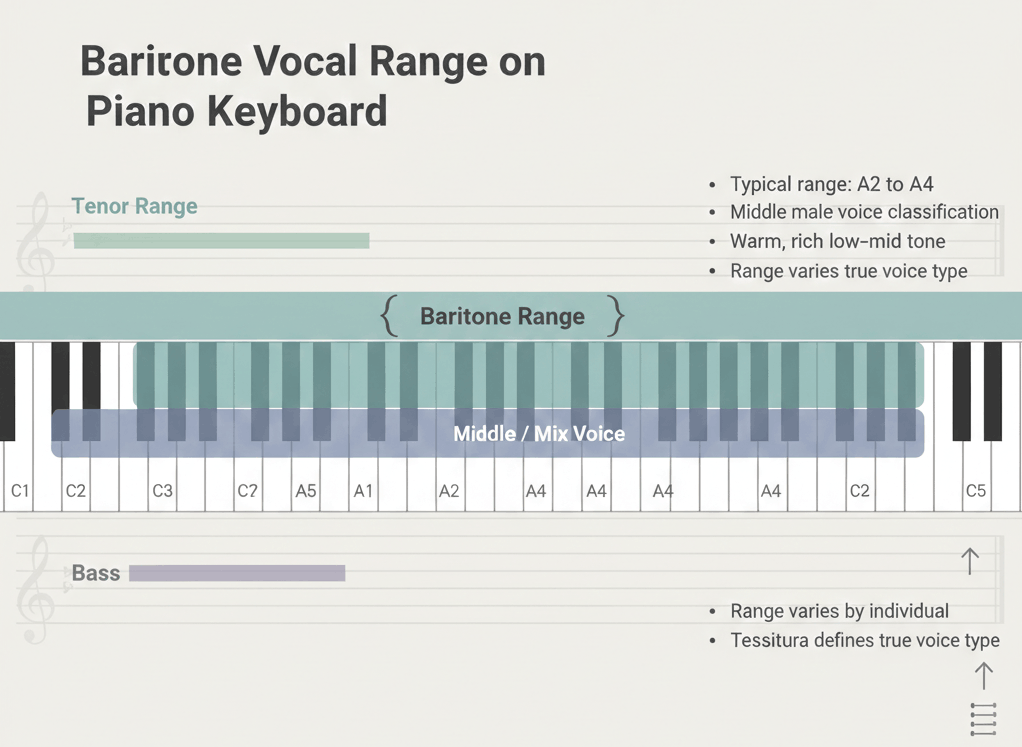
Baritone Vocal Range Notes and Tessitura
While charts often list extreme notes, professional voice classification focuses on tessitura—the range where the voice functions best over time.
Typical baritone characteristics include:
- Strong lower-middle register
- Full, warm tone around speaking pitch
- Comfortable sustained singing below E4
- Upper notes possible, but not effortless
A visual comparison of baritone placement among other voices is available in the vocal range chart.
Baritone vs Tenor: The Most Common Male Voice Confusion
Many men are unsure whether they are baritones or tenors because range overlap is normal.
Key differences:
- Baritones feel more comfortable lower and fatigue faster in high tessitura
- Tenors sustain higher notes with less effort
- Both may reach similar top notes briefly
Choir placement and limited testing often label singers incorrectly. A focused comparison is covered in tenor vs baritone explained.
Baritone vs Bass: Not as Close as It Seems
Another common misconception is that baritone and bass are nearly the same.
In reality:
- Bass voices have a lower tessitura and darker resonance
- Baritones sit higher and spend less time in extreme low notes
If you’re unsure where the line falls, baritone vs bass comparison explains the distinction clearly.
Range vs Tessitura: Why Comfort Matters More Than Extremes
Many singers misclassify themselves by focusing on:
- One-time high notes
- Forced low notes
- Range tests without context
Professional classification emphasizes where you can sing:
- Repeatedly
- With stable pitch
- Without vocal strain
If pitch becomes unreliable near the edges of your range, improving coordination is more important than pushing higher. This is addressed in how to improve pitch accuracy.
How to Tell If You’re Truly a Baritone
A reliable approach includes:
- Gentle warm-up
- Singing scales without pushing
- Noting where the voice feels strongest
- Identifying where fatigue appears first
Objective tools reduce bias. The voice type classifier helps evaluate range and comfort using measurable data rather than assumptions.
Can Baritones Sing High Notes?
Yes—but with realistic expectations.
Baritones can sing high notes, especially with training, but:
- Sustained high tessitura is tiring
- Forcing tenor repertoire increases strain
- Ignoring natural limits reduces vocal longevity
Healthy development focuses on efficiency, not imitation. A safe approach is outlined in how to increase vocal range safely.
Why Being a Baritone Is Not a Limitation
Baritone is not a “failed tenor.” It is a central, versatile voice type used across:
- Classical repertoire
- Musical theatre
- Pop and rock
- Choral music
Many iconic singers are baritones who succeed because they sing within their natural tessitura rather than chasing extremes.
Key Takeaways
- Baritone is the middle male singing voice
- Typical range centers around A2–A4
- Tessitura matters more than maximum notes
- Baritone is often confused with tenor
- Accurate testing prevents long-term strain
Many singers ask whether baritone is the most common male voice type—it is, largely because most male voices sit comfortably in the middle range. Others wonder if baritones can sing tenor songs; individual notes may be possible, but sustained tenor tessitura usually causes fatigue. Some ask whether training can change a baritone into a tenor—training improves control, but it does not change vocal anatomy.
Another frequent concern is whether baritones are “low” voices; in reality, baritone is a middle voice, not a low one. Finally, many ask how to test their range accurately; structured pitch-based testing is far more reliable than guessing or copying online examples.
Related Articles:
- A clear starting point is understanding the typical boundaries outlined in this baritone range overview.
- Since tessitura matters more than extremes, this explanation of vocal comfort zones helps clarify where baritones sit most naturally.
- To avoid mislabeling your voice, reviewing how vocal range is defined can prevent common mistakes.
- Practical testing matters, and this guide to testing your range offers a reliable way to check your notes.
- Many singers confuse low voices, so comparing with this bass range reference can highlight key differences.
- Range perception can shift over time, which is why this age-related analysis adds important context.
- For deeper confirmation of low-note strength, this deep voice analysis can support baritone classification.