
When I first tried to increase my vocal range, I believed the most common myth:
If I just push higher and lower notes every day, my range will expand.
What actually happened was the opposite. My voice fatigued faster, high notes felt tighter, and progress completely stalled.
The real breakthrough came when I stopped forcing notes and focused on coordination, breath control, and tension reduction instead.
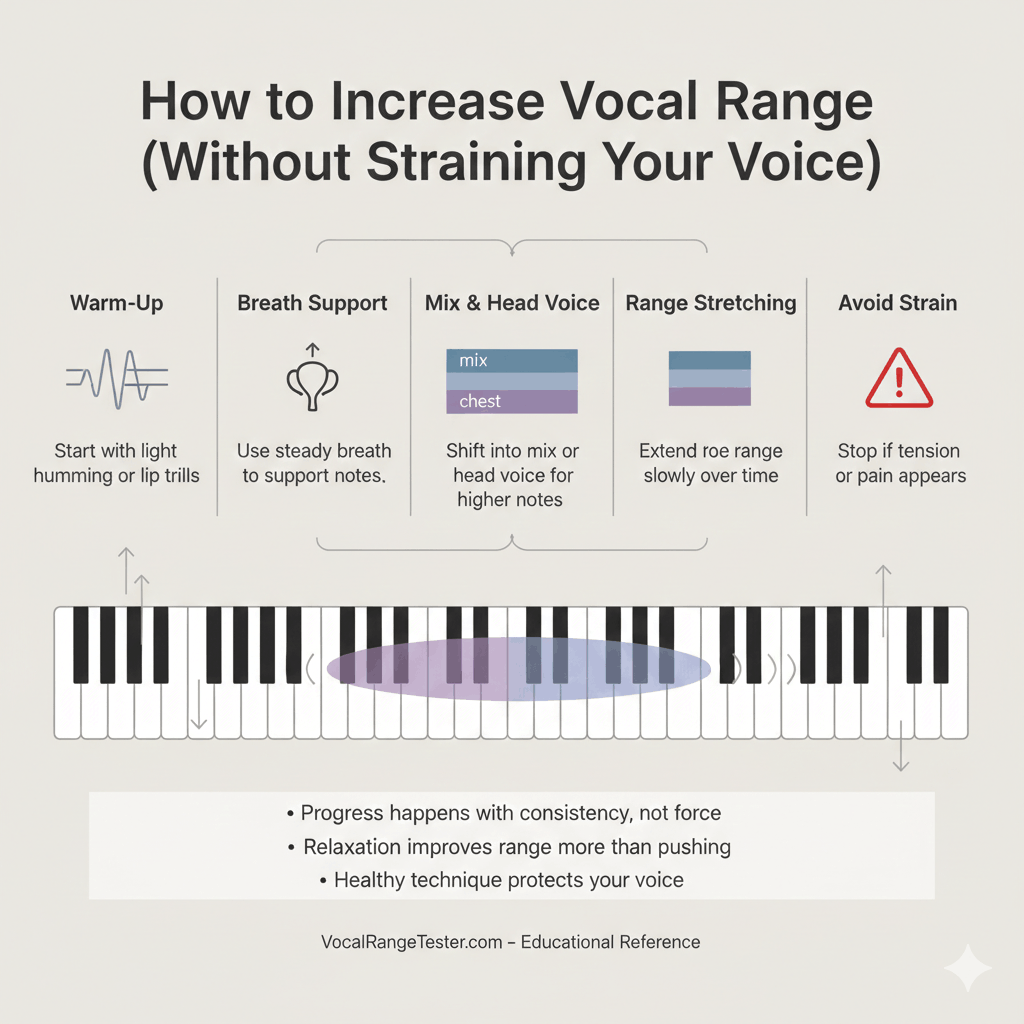
To increase vocal range safely, practice daily warm-ups like lip trills, sirens, and gentle scales while maintaining relaxed breath support. Gradually extend notes without forcing them—consistent, strain-free training is what truly expands range over time.
How Do You Increase Vocal Range?
You increase vocal range by improving breath support, reducing throat tension, strengthening coordination between registers, and gradually expanding comfortable notes instead of forcing extreme pitches.
To increase vocal range without straining, use daily warm-ups like lip trills, vocal sirens, and light scales to stretch your voice gradually. Support notes with steady breath, stay relaxed, and avoid forcing high or low pitches—consistent, gentle training is what truly expands range.
What “Increasing Vocal Range” Really Means
One of the biggest misunderstandings I had was thinking range meant new notes appearing overnight.
In reality, increasing vocal range means:
- Making more notes usable
- Singing higher or lower with less effort
- Improving consistency, not extremes
This lines up with the practical definition of what vocal range actually means, not exaggerated claims you see online.
Why Most Singers Struggle to Increase Vocal Range
From experience, progress usually stalls because of:
- Poor breathing habits
- Excess throat tension
- Over-practicing high notes
- Skipping warm-ups
I spent months stuck until I fixed breathing first. Stable airflow removed tension I didn’t even realize I was creating.
That’s why breathing techniques for vocal range are foundational — not optional.
The Biggest Mistake I Made (That Slowed Everything Down)
I practiced only my highest notes.
That made my voice:
- Tight
- Unreliable
- Harder to control in songs
Once I shifted focus to strengthening the middle of my range, my high notes started to feel easier without forcing. This pattern is extremely common but rarely explained.
Step-by-Step: How to Increase Vocal Range Safely
1. Warm Up Properly (This Changed Everything)
Testing or stretching range on a cold voice gives inconsistent results and increases strain.
Simple warm-ups like lip trills or gentle scales prepare the voice efficiently. You can see structured examples in vocal warm-up exercises.
2. Build Strength in Your Comfortable Range
Your middle range acts as a bridge to higher and lower notes.
When I stopped avoiding it and trained there consistently:
- Transitions smoothed out
- High notes stopped feeling “scary”
- Endurance improved
3. Use Gentle Slides Instead of Forced Jumps
Sliding exercises helped me discover new notes without tension.
Key rules:
- Light volume
- Slow movement
- Stop before strain
Slides reveal coordination gaps safely instead of forcing through them.
4. Rest Is Part of Range Growth
One of my biggest early mistakes was practicing range exercises every single day.
Once I added rest days:
- My voice recovered faster
- Notes felt easier
- Progress became more consistent
Simple Daily Vocal Range Exercise Routine (10–15 Minutes)
| Exercise | Time | Purpose |
|---|---|---|
| Gentle warm-ups | 3 min | Prepare voice |
| Mid-range scales | 4 min | Build control |
| Light slides | 4 min | Expand range safely |
| Cool-down | 2–4 min | Reduce tension |
How Long Does It Take to Increase Vocal Range?
From real experience and observation:
- Weeks → notes feel easier
- Months → usable range expands
- Long-term → consistency improves
Sudden jumps are rare. Sustainable progress is gradual.
Vocal Range vs Usable Range (Difference)
Early on, I technically “had” certain notes — but couldn’t use them musically.
Usable range means:
- Repeatable
- Controlled
- Reliable
Comparing yourself to realistic benchmarks like the average vocal range helps avoid unnecessary frustration.
How to Track Real Progress (Without Guessing)
I made the mistake of relying on how my voice felt. That changed daily.
Tracking progress objectively using a vocal range calculator showed what was actually improving — and what wasn’t.
Does Improving Pitch Accuracy Help Vocal Range?
Yes — more than most people expect.
When pitch accuracy improved, my voice stopped over-correcting notes, which reduced tension. That’s why range often improves alongside how to improve pitch accuracy, even without direct range pushing.
- Vocal range increases through efficiency, not force
- Breathing matters more than stretching notes
- Middle-range work unlocks high notes
- Rest improves results
- Control beats extremes
Frequently Asked Questions
Can vocal range really be increased?
Yes, especially usable range, through better coordination and reduced tension.
How long does it take to increase vocal range?
Most singers notice improvements within weeks and clearer expansion over months.
Is it bad to push high notes?
Yes. Pushing creates tension and slows progress.
Do warm-ups increase vocal range?
They don’t create range, but they allow safe access to existing notes.
Why does my range disappear some days?
Fatigue, stress, hydration, and warm-ups all affect coordination.
Should I practice range exercises every day?
Light work is fine, but rest days are essential.
Does breathing really affect vocal range?
Yes. Unstable airflow is one of the biggest range limiters.
Is a wider range always better?
No. Control and consistency matter more.
Can beginners increase vocal range?
Yes — beginners often improve the fastest.
What’s the biggest mistake singers make?
Chasing extreme notes instead of improving coordination.
Related Articles:
- Expanding range safely starts with airflow, which is why proper breathing techniques play such a critical role.
- Many singers unlock higher notes once they understand effective high-note technique without added tension.
- Consistent progress is easier when sessions begin with targeted warm-up exercises designed for flexibility.
- Knowing realistic limits helps prevent strain, so reviewing how many octaves most people sing adds useful perspective.
- Tracking usable notes over time becomes clearer with a detailed vocal note reference instead of guessing extremes.
- Since voices adapt over years, understanding how age affects vocal range helps set smart expectations.
- To confirm gains objectively, many singers regularly find their vocal range online as they train.