
For a long time, I assumed vocal health only mattered when something went wrong.
As long as I could sing, I ignored the subtle signs: a slightly raspy voice the next morning, tightness after long sessions, or days when my voice felt unpredictable for no clear reason. None of it felt serious—until consistency became a problem.
What I eventually learned is simple but important:
Vocal health isn’t about avoiding disaster. It’s about avoiding slow, silent damage.
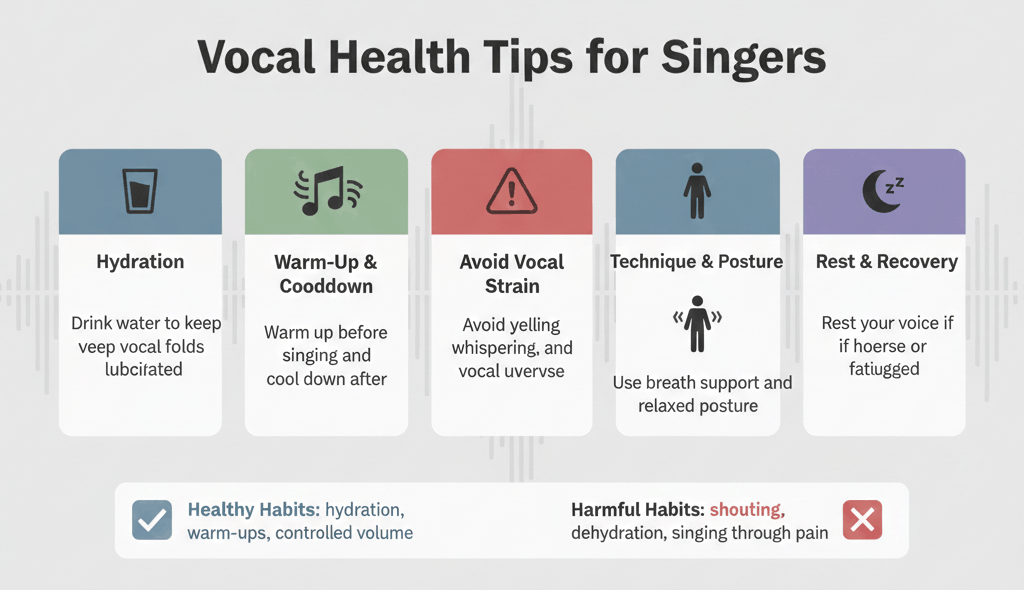
Vocal health tips for singers include staying hydrated, warming up before singing, avoiding strain and yelling, resting your voice regularly, and maintaining good posture and breath support. Consistent care helps protect vocal cords, improve tone, and extend singing longevity.
This guide focuses on vocal health tips that actually work in real life, not just theory—written to help singers build voices that last.
What Is Vocal Health?
Vocal health is the ability of the vocal cords to function efficiently over time without strain, inflammation, or injury—allowing a singer to perform consistently and comfortably.
Good vocal health is built through habits, not quick fixes. You can try a voice test by clicking here.
Why Vocal Health Matters More Than Power or Range
Early on, I focused on range and volume. If I could sing higher or louder, I assumed I was improving. In reality, I was sacrificing stability for short-term gains.
Healthy voices:
- Recover faster
- Sound consistent day to day
- Handle longer practice sessions
- Improve more predictably
Unhealthy voices feel unreliable—even when nothing “hurts.”
Essential Vocal Health Tips for Singers (That Actually Help)
1. Warm Up Every Time — Even on “Good” Days
Skipping warm-ups was my most common mistake.
The days my voice felt fine were often the days I skipped preparation—and felt fatigue later.
Gentle warm-ups:
- Improve coordination
- Reduce stiffness
- Lower strain risk
Use light routines like humming, lip trills, and easy scales from vocal warm-up exercises.
2. Stop Singing Through Tension (This Is Where Damage Starts)
One of the hardest lessons was learning that “pushing through” isn’t training.
Early warning signs:
- Throat tightness
- Jaw or neck tension
- Scratchy or burning sensations
If high notes trigger tension, correct technique matters more than effort. Review how to sing high notes without straining before continuing.
3. Use Tools to Monitor Your Voice (Not Just Your Ears)
Perception can be misleading—especially when fatigue builds gradually.
Using a tool to objectively check pitch consistency and vocal behavior helped me notice problems earlier, before they turned into strain.
A structured option like the pitch accuracy analyzer can help identify instability that often accompanies vocal fatigue.
4. Hydration Supports Health — But It’s Not Instant
I used to drink water during practice and expect immediate relief. That doesn’t work.
Key points:
- Vocal cords hydrate systemically (over hours)
- Small, consistent intake matters more than volume
- Dry environments increase strain
Hydration supports vocal health—but it can’t override poor habits.
5. Vocal Rest Is Part of Training, Not a Setback
One of the biggest mindset shifts was learning to rest before something felt wrong.
Healthy vocal rest includes:
- Short breaks during long sessions
- Reduced unnecessary talking
- Lighter days after heavy use
Rest protects progress—it doesn’t erase it.
6. Whispering Is Not Gentle (A Common Mistake)
After intense sessions, I used to whisper to “save” my voice. That actually increased tension.
Whispering can place extra stress on the vocal cords. If your voice is tired, speak softly but normally—or rest completely.
This is explained clearly in does whispering strain your voice.
7. Track Changes in Your Voice Over Time
Small changes often go unnoticed until they become patterns.
Occasionally checking your voice with an online tool from the vocalrangetester can help you spot:
- Shrinking usable range
- Pitch instability
- Fatigue patterns
Catching these early prevents bigger issues later.
Habits That Quietly Damage Vocal Health
| Habit | Why It’s Risky |
|---|---|
| Singing loudly while tired | Increases strain |
| Skipping warm-ups | Reduces coordination |
| Constant throat clearing | Irritates vocal cords |
| Whispering to “rest” | Increases tension |
| Ignoring mild hoarseness | Allows damage to build |
Most vocal problems don’t start dramatically—they accumulate.
How to Recover a Tired Voice Safely
When my voice felt off, the most effective recovery steps were simple:
- Vocal rest
- Gentle warm-ups only (no pushing)
- Hydration
- Reduced talking
If symptoms persist for several days, stop training and reassess. Vocal health problems worsen when ignored.
Best vocal health tips for singers:
- Warm up gently every time
- Avoid singing through tension
- Stay consistently hydrated
- Respect vocal rest
- Use proper breath support
- Avoid whispering
- Monitor your voice objectively
Frequently Asked Questions
1. Is hoarseness after singing normal?
Occasional mild hoarseness can happen, but it should resolve quickly. Persistent hoarseness is a warning sign.
2. Can vocal cords heal?
Yes, many issues improve with rest and healthier habits if addressed early.
3. How much rest does a singer need?
It depends on usage, but frequent short breaks are better than pushing through fatigue.
4. Does vocal health affect range?
Yes. Healthy voices access range more easily and consistently.
5. Can beginners damage their voice?
Yes—especially by pushing volume or range without coordination.
6. Is pain ever part of vocal training?
No. Pain is a stop signal, not a training tool.
7. Should singers practice every day?
Daily practice is fine only if vocal health is respected.